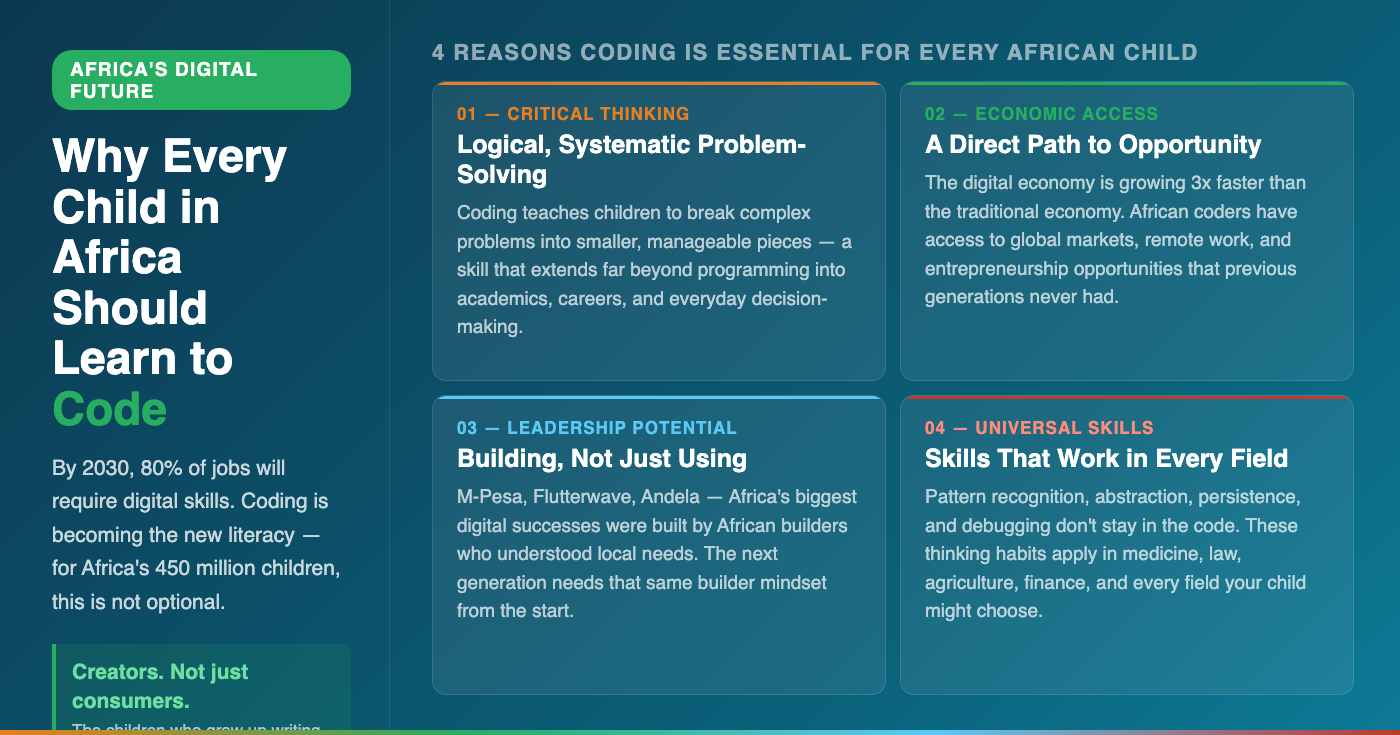
In a world where technology touches every aspect of our lives — from healthcare to finance, education to entertainment — coding is becoming the new literacy. For Africa's 450 million children and young people, learning to code isn't just about preparing for future jobs. It's about shaping the continent's technological destiny.
The Big Picture
By 2030, 80% of jobs will require digital skills. Africa's youth deserve to be not just consumers of technology, but creators and leaders in the digital economy. The children who grow up writing code will build the infrastructure, solve the problems, and own the platforms of tomorrow's Africa.
1. Coding Develops Critical Thinking
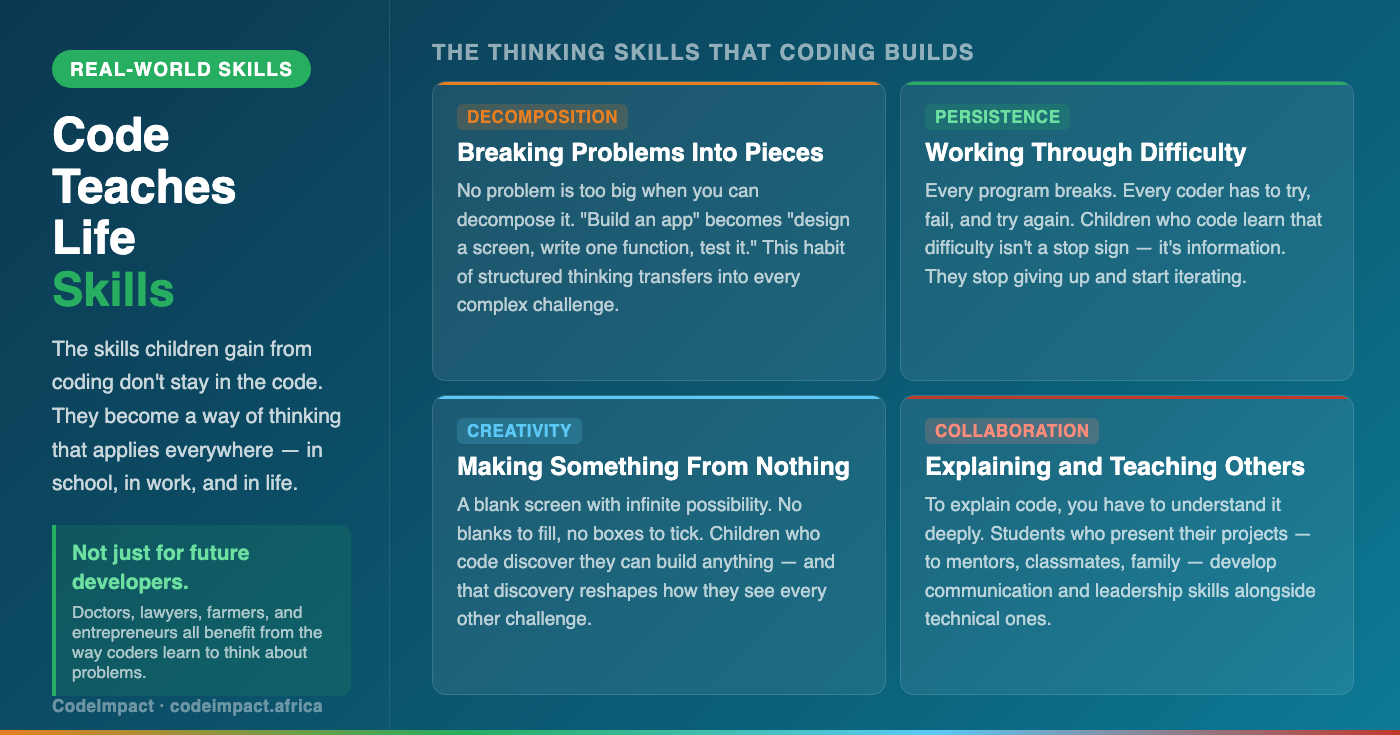
When children learn to code, they learn to think logically and systematically. Breaking down complex problems into smaller, manageable pieces is a skill that extends far beyond programming — it's a life skill that helps in academics, careers, and everyday decision-making.
Problem Decomposition
Breaking big problems into smaller, solvable pieces — a habit of mind that makes every challenge more approachable.
Pattern Recognition
Identifying similarities and differences in problems, so solutions from one context can be applied to another.
Algorithmic Thinking
Creating clear, step-by-step solutions that a computer — or another person — can follow reliably.
Abstraction
Focusing on what matters and filtering out the noise — the foundation of efficient problem-solving in any field.
2. Economic Opportunity Is Global
A child in Kampala, Lagos, or Nairobi who learns to code can compete for global opportunities. Remote work, freelancing platforms, and the gig economy mean that geography is no longer a barrier to economic success. The numbers tell the story:
- $100K+ — average junior developer salary globally
- 40% — annual growth rate in remote tech jobs
- 2 million+ — unfilled tech jobs globally right now
3. Africa Needs Homegrown Solutions
Who understands Africa's challenges better than Africans themselves? From mobile banking solutions like M-Pesa to health tech innovations, African innovators are building for Africa. Your child could be the next problem-solver across any of these four urgent sectors:
Healthcare
Building apps that connect patients to doctors, digitise health records, and deliver medicine to remote areas — solving problems that affect millions of people who currently have no access to quality care.
Agriculture
Creating platforms that help farmers access real-time market prices, weather data, and modern farming techniques via mobile phone — transforming how Africa feeds itself.
Education
Developing offline-first learning platforms that deliver quality education to every child, in every language, regardless of internet access or location — closing the gap that geography currently creates.
Energy
Innovating smart grid systems, solar energy platforms, and pay-as-you-go energy solutions that bring reliable power to communities that have never had it.
4. It's Easier Than Ever to Start
Gone are the days when learning to code required expensive computers or a formal computer science degree. Today, any child with a smartphone can start their coding journey. Many coding platforms work on basic mobile devices, and our programmes are designed to be accessible whether your child has a tablet, a laptop, or just a phone.
The Time Is Now
Every day you wait is a day your child falls further behind their peers in other parts of the world. The best time to start was yesterday. The second best time is today.
Give your child the gift of computational thinking and digital skills. Our Hour of Code programme is designed specifically for African children aged 6–18, with curriculum built around local context and global opportunity.
Ready to start your coding journey?
Join thousands of students across Africa who are learning to code with CodeImpact's affordable and accessible programs.