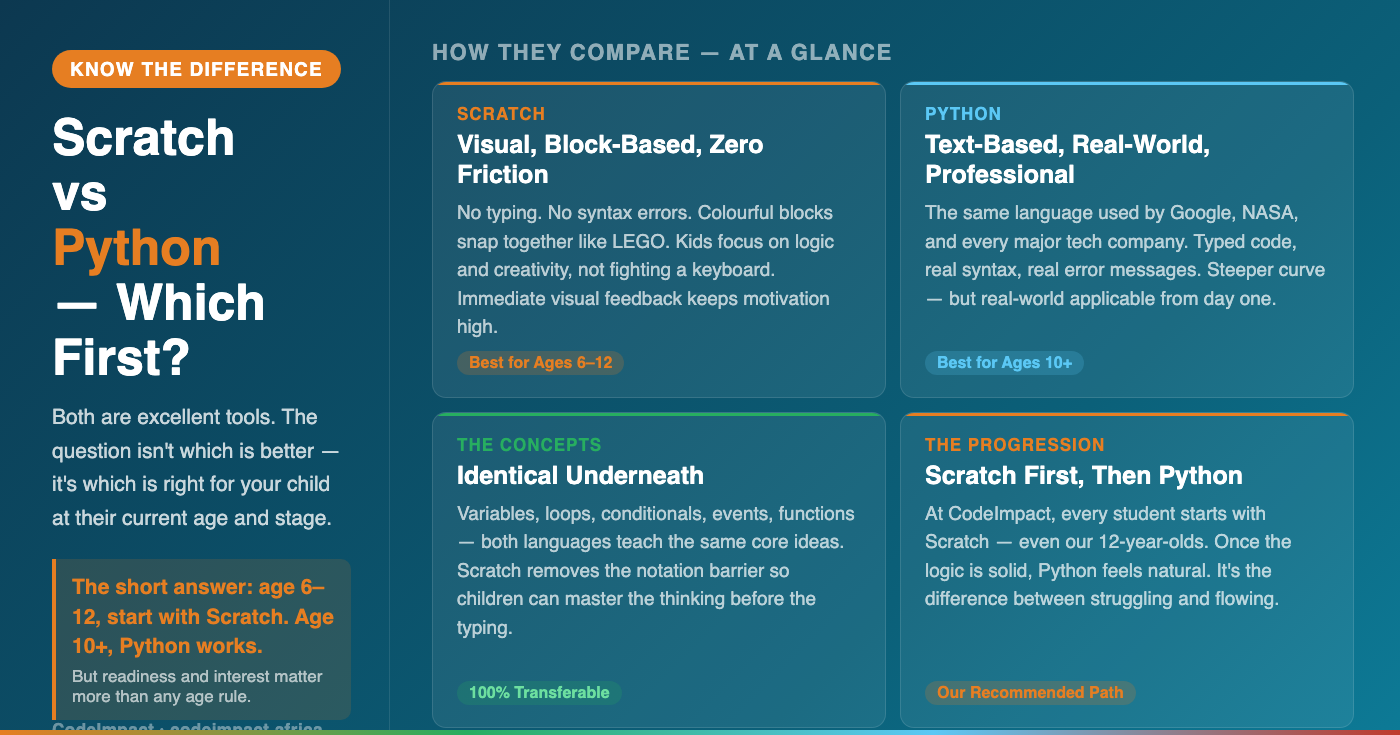
One of the most common questions parents ask us is: "What programming language should my child learn first?" The answer often comes down to two popular choices: Scratch and Python. Let's help you understand which is right for your child.
The Short Answer
Ages 6–12: Start with Scratch. Ages 10+: Start with Python. But there's more nuance — let's dive deeper.
What Is Scratch?
Scratch is a visual, block-based programming language designed specifically for children. Instead of typing code, kids drag and connect colourful blocks that snap together like LEGO pieces.
Pros of Scratch
- No typing required — perfect for younger children
- Instant visual feedback — see results immediately
- Error-free — blocks can't connect incorrectly
- Creative freedom — build games, stories, animations
- Free — available at scratch.mit.edu
Cons of Scratch
- Not a "real" language — different from professional coding
- Limited applications — mostly games and animations
- No text-based coding — doesn't prepare for Python or JavaScript
What Is Python?
Python is a professional text-based programming language used by companies like Google, NASA, and Netflix. It has simple, readable syntax that makes it one of the best first text-based languages.
Pros of Python
- Real-world skills — used by professionals globally
- Versatile — web, data science, AI, automation
- Readable — looks almost like English
- High demand — #1 language for beginners and pros
- Career-ready — direct path to tech jobs
Cons of Python
- Typing required — can be challenging for younger kids
- Errors happen — syntax mistakes frustrate some kids
- Steeper learning curve — requires more patience
The Comparison
Feature Scratch Python Best Age 6–12 years 10–18 years Learning Style Visual / Block-based Text-based Typing Required No — drag and drop Yes — keyboard input Career Relevance Limited to learning High — used by pros globally Complexity Low Medium Time to First Project About 30 minutes 2–3 hours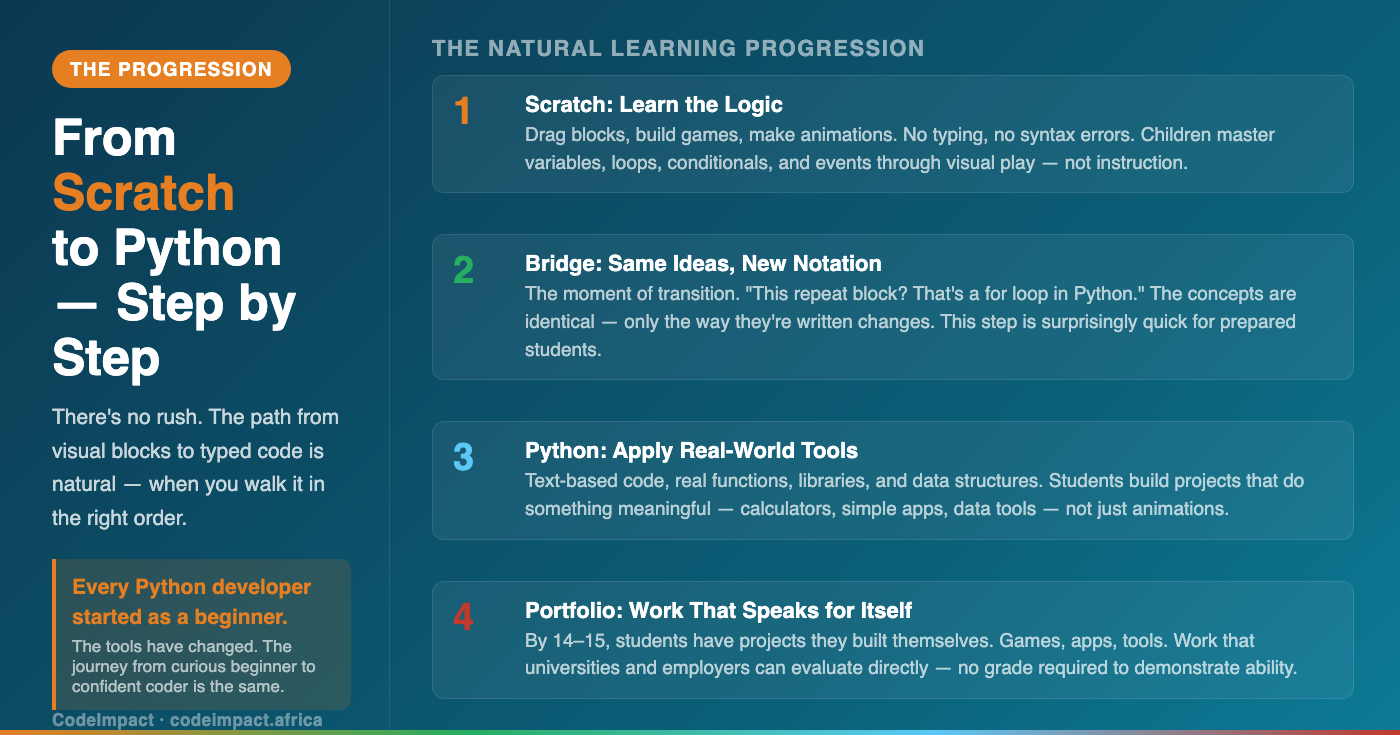
Our Recommendation
For Ages 6–9
Start with Scratch. It's perfect for young minds to understand programming concepts (loops, conditions, variables) without the frustration of typing. Most children in this age group haven't mastered typing yet, which can be a barrier to Python.
For Ages 10–12
This is the transition zone. If your child has done Scratch or shows strong interest, try Python. Otherwise, continue with Scratch. Some kids are ready for Python as early as age 9 if they have good typing skills.
For Ages 13+
Go straight to Python. At this age, children can handle the typing and are ready for "real" programming. Python will give them skills directly applicable to future careers.
Ready to Start?
Not sure which programme is right for your child? Our Hour of Code session is a great way to try both approaches and see what clicks. We assess each child's readiness and recommend the best path forward.
Ready to start your coding journey?
Join thousands of students across Africa who are learning to code with CodeImpact's affordable and accessible programs.